TUI Flight BY6754 Emergency Landing: What Happened, Why It Diverted, and What Passengers Should Know

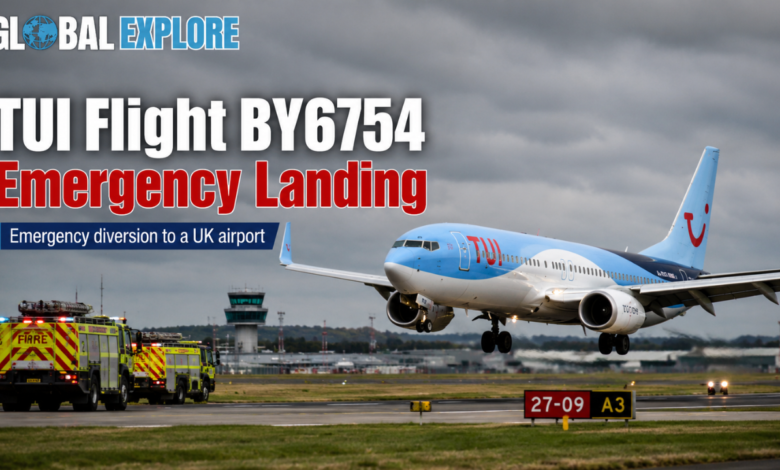
The TUI Flight BY6754 emergency landing gained attention after the aircraft diverted to Birmingham Airport shortly after departing from Cardiff for Paphos, Cyprus. The incident raised concern among passengers and led many people to search for clear information about what happened, why the flight changed course, and whether everyone onboard was safe.
The flight experienced a bird strike shortly after takeoff, which prompted the crew to make a precautionary emergency diversion. The aircraft landed safely at Birmingham Airport, where emergency services were prepared to respond as part of standard safety procedures.
At first, some reports and passenger comments raised questions about a possible engine issue. However, the airline later clarified that the aircraft did not suffer an engine failure. The diversion was made as a safety measure after the bird strike, showing how aviation crews respond carefully when unexpected problems arise.
This article explains the TUI Flight BY6754 emergency landing in detail, including what happened during the flight, why Birmingham Airport was chosen, what passengers experienced, and why bird strikes are treated seriously in modern aviation.
What Was TUI Flight BY6754?
TUI Flight BY6754 was operating as a passenger service from Cardiff Airport in Wales to Paphos, Cyprus, a well-known holiday destination. The route is often used by leisure travelers heading to the Mediterranean for vacations, family trips, and seasonal breaks.
The flight began like a normal international journey. Passengers boarded expecting a routine trip from the United Kingdom to Cyprus. However, shortly after takeoff, the aircraft encountered an unexpected issue that required the pilots to reassess whether continuing the journey was the safest option.
Instead of flying onward to Paphos, the crew made the decision to divert the aircraft and land at Birmingham Airport. This decision turned the flight into a widely discussed aviation incident and led to increased interest in the search term “TUI Flight BY6754 Emergency Landing.”
What Happened During the Emergency Landing Incident?
The TUI Flight BY6754 emergency landing occurred after the aircraft departed from Cardiff and experienced an abnormal event shortly after takeoff. The issue was later identified as a bird strike, which means a bird made contact with the aircraft during the early stage of the flight.
Bird strikes can happen near airports because aircraft are flying at lower altitudes during takeoff and landing. While many bird strikes are minor, they still require careful assessment because the full effect may not be immediately visible from inside the cockpit.
After the incident, the pilots decided not to continue the long route toward Cyprus. Instead, they coordinated with air traffic control and prepared for a safe diversion. The aircraft remained airborne while the crew handled the situation and arranged an approach into Birmingham Airport.
The flight then completed a safe landing. Passengers were able to leave the aircraft after arrival, and the event was handled without a reported serious outcome.
Why Did TUI Flight BY6754 Divert to Birmingham?
The diversion happened because the flight crew chose the safest course of action after the bird strike. Even if an aircraft remains stable and controllable, pilots may decide that continuing a long international journey is not appropriate until the plane has been fully examined by engineers.
A bird strike can potentially affect several parts of an aircraft, including:
- Engine areas
- External body panels
- Windscreen sections
- Nose structure
- Sensors and monitoring equipment
- Other forward-facing surfaces
Because pilots cannot always confirm the full extent of possible damage while still in the air, a precautionary landing allows the aircraft to be inspected properly on the ground.
Why Birmingham Airport Was Chosen
Birmingham Airport was a practical diversion point because it had the facilities needed to receive the aircraft safely. A suitable diversion airport usually offers:
- A runway that can accommodate the aircraft
- Air traffic control support
- Airport fire and rescue services
- Space for inspection and passenger handling
- Operational capacity to accept an unscheduled arrival
Choosing a diversion airport is not random. Pilots and controllers consider the aircraft’s position, the nature of the concern, airport readiness, weather conditions, and the most secure route to landing.
In the case of the TUI Flight BY6754 emergency landing, Birmingham Airport was able to prepare for the arrival and support the aircraft once it reached the ground.
Was the Emergency Caused by Engine Failure?
One of the biggest questions surrounding the TUI Flight BY6754 emergency landing was whether the plane had suffered an engine failure.
Some early accounts suggested there may have been an engine-related issue because passengers reportedly noticed unusual vibrations, sounds, and a burning smell. In a stressful moment, passengers often describe what they feel or hear before the final technical explanation is available.
However, the airline later clarified that the aircraft experienced a bird strike after takeoff and that the diversion was a precautionary procedure. It also stated that there was no engine failure.
This distinction is important because it prevents the event from being described inaccurately. The clearest way to summarize the incident is:
TUI Flight BY6754 made a precautionary emergency diversion to Birmingham Airport after a bird strike shortly after takeoff from Cardiff.
What Is a Bird Strike and Why Is It Serious?

A bird strike occurs when a bird collides with an aircraft. These incidents are most likely to happen during takeoff, initial climb, descent, or landing, when planes are operating closer to the ground.
Bird strikes vary in severity. Some may leave only minor marks, while others can create concerns that require immediate action. The level of risk depends on several factors:
- The size of the bird
- The speed of the aircraft
- The point of impact
- Whether one bird or several birds are involved
- Whether the strike affects a critical part of the plane
Why a Bird Strike Can Lead to an Emergency Diversion
A bird strike may not always cause visible trouble right away, but pilots still treat it seriously because:
- Possible damage may not be fully known in flight.
- Aircraft systems may require inspection.
- A long onward journey could create unnecessary risk.
- Safety procedures encourage caution after unexpected impact.
For a route from Cardiff to Cyprus, continuing after a bird strike would mean traveling for hours before inspection. A diversion allows aviation teams to assess the aircraft quickly and accurately.
That is why the TUI Flight BY6754 emergency landing should be viewed as a careful safety response rather than an overreaction.
Passenger Experience During the Incident
The incident was understandably worrying for passengers onboard. Some reports described people noticing:
- A sudden change in the normal feel of the flight
- Unusual vibration
- A rumbling or unexpected sound
- A noticeable smell
- Confusion about why the route had changed
When passengers sense that something is different but do not yet know the reason, it can create anxiety. In aviation incidents, information often becomes clearer only after the pilots have completed their first safety checks and coordinated with air traffic control.
Why Passengers May Not Receive Immediate Full Details
During an unexpected situation, pilots follow a strict order of priorities:
- Keep the aircraft under safe control
- Identify and assess the issue
- Speak with air traffic control
- Decide whether to continue, return, or divert
- Coordinate with cabin crew
- Update passengers when it is safe and practical to do so
This process may create a short period of uncertainty for travelers, but it allows the crew to focus first on the most important task: protecting everyone onboard.
In the case of TUI Flight BY6754, the aircraft reached Birmingham safely, which remains the most significant part of the story.
How Airports Respond to Emergency Diversions
When a flight declares an emergency or requests a precautionary diversion, the receiving airport may activate a prepared response plan. This usually involves coordination between:
- Air traffic control
- Airport operations teams
- Fire and rescue units
- Ground handling staff
- Airline representatives
The airport may also adjust other arrivals or departures to make sure the diverting aircraft has the safest possible approach and landing environment.
Why Emergency Vehicles May Be Waiting
Emergency vehicles are often positioned near a runway when an aircraft is landing under emergency or precautionary status. This is not automatically a sign that a crash is expected. Instead, it means responders are prepared in case assistance is needed.
They may be ready to:
- Monitor the aircraft during landing
- Check for signs of smoke or overheating
- Respond quickly if braking or taxiing issues arise
- Assist with evacuation if necessary
- Support engineers and airport teams after arrival
During the TUI Flight BY6754 emergency landing, emergency teams were ready at Birmingham Airport, and the aircraft was able to land safely.
What Squawk 7700 Means in Aviation
A term often connected with emergency aviation incidents is squawk 7700.
Aircraft use transponder codes to share important information with air traffic control. 7700 is the standard code used to indicate a general emergency. When this code appears, controllers immediately understand that the aircraft may need priority support.
What Happens When an Aircraft Uses Emergency Status
Once an aircraft is treated as an emergency, air traffic control can:
- Give the flight priority routing
- Coordinate with a nearby airport
- Create clear airspace if needed
- Notify rescue and fire services
- Support the crew with faster decision-making
This kind of coordinated response helps explain why diversions like the TUI Flight BY6754 emergency landing are often managed efficiently and safely.
Why Precautionary Emergency Landings Happen
The phrase “emergency landing” can sound very alarming, but many emergency landings are made as a precaution, not because a crash is imminent.
A precautionary landing may happen when:
- A warning light appears
- A bird strike occurs
- A strange smell or sound is reported
- A technical issue requires inspection
- There is a medical concern onboard
- Weather changes make the original plan less safe
- Pilots want to reduce uncertainty before continuing
Safety Comes Before Schedule
Commercial aviation is built around choosing the safest option rather than the most convenient one. Delays, diversions, and disruptions are frustrating for travelers, but they are sometimes necessary to preserve safety.
In the case of the TUI Flight BY6754 emergency landing, the crew decided that continuing to Cyprus was not the best choice after the bird strike. Diverting to Birmingham allowed the situation to be handled in a controlled and professional way.
What This Incident Shows About Flight Safety
The TUI Flight BY6754 emergency landing highlights several important points about modern aviation safety.
1. Flight Crews Are Trained for Unexpected Situations
Pilots train for abnormal events, including bird strikes, system alerts, and precautionary diversions. Their decisions are guided by procedures designed to reduce risk.
2. Diversions Are Part of Safe Aviation
A diversion does not always mean something disastrous has happened. Often, it means the crew is acting responsibly before a smaller concern becomes a bigger one.
3. Airport Emergency Teams Are Part of the Safety System
Airport fire and rescue services are trained to respond quickly. Their presence gives crews additional support when landing after an abnormal event.
4. Early Information Can Be Incomplete
Initial reports may not always reflect the full technical explanation. This is why later confirmation from airlines and official statements are important when understanding events accurately.
5. Passenger Safety Remains the Highest Priority
The most important outcome of the TUI Flight BY6754 emergency landing is that the aircraft landed safely, emergency procedures worked as intended, and passengers were able to disembark after arrival.
Frequently Asked Questions
What happened to TUI Flight BY6754?
TUI Flight BY6754 diverted to Birmingham Airport after a bird strike shortly after takeoff from Cardiff. The aircraft landed safely.
Why did TUI Flight BY6754 make an emergency landing?
The flight made a precautionary emergency diversion because the aircraft had experienced a bird strike and needed to be checked safely on the ground.
Did TUI Flight BY6754 have engine failure?
No. The airline later clarified that there was no engine failure. The diversion was linked to a bird strike after departure.
Where was TUI Flight BY6754 going?
The aircraft was traveling from Cardiff Airport in Wales to Paphos, Cyprus.
Were passengers on TUI Flight BY6754 safe?
Yes. The aircraft landed safely at Birmingham Airport, and passengers were able to leave the plane after the diversion.
Why are bird strikes treated seriously?
Bird strikes can affect important aircraft areas or systems. Even when the aircraft remains controllable, pilots may divert as a safety precaution.
Conclusion
The TUI Flight BY6754 emergency landing was a significant aviation incident that attracted public attention because of the unexpected diversion, passenger concern, and emergency response at Birmingham Airport. The flight had departed Cardiff for Paphos when it experienced a bird strike shortly after takeoff, leading the crew to divert as a precaution.
While early discussion created questions about a possible engine problem, the airline later clarified that there was no engine failure. The aircraft landed safely, airport services were prepared, and passengers were able to disembark after arrival.
Overall, the incident shows how aviation safety procedures are designed to work. Pilots respond cautiously, airports prepare in advance, and decisions are made with passenger safety as the main priority. The TUI Flight BY6754 emergency landing was not simply a disruption to a travel schedule; it was an example of a safety system responding effectively to an unexpected event.
If you enjoyed this article, read more about Search Terms That Can Help You Find Better Local Options.
Updated: May 2026
Globalexplore.co.uk