
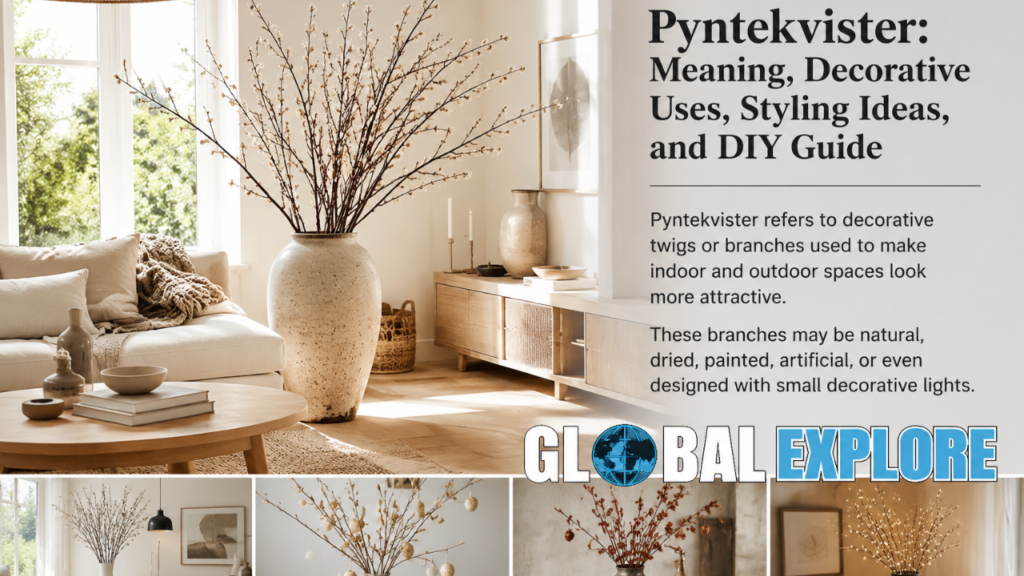
Pyntekvister is a term that has gained attention among people interested in Scandinavian décor, natural styling, and simple home design. At its core, Pyntekvister refers to decorative twigs or branches used to make indoor and outdoor spaces look more attractive. These branches may be natural, dried, painted, artificial, or even designed with small decorative lights.
The idea behind Pyntekvister is simple, yet visually powerful. A few carefully chosen branches placed in a vase can transform an empty corner, add texture to a living room, or create a seasonal centerpiece without overwhelming the space. This is why decorative branches have become popular in modern homes, minimalist interiors, event styling, and Nordic-inspired décor.
The word itself is commonly understood as being connected to decoration and twigs. In practical terms, Pyntekvister means ornamental branches used for visual styling. They are not limited to one specific shape, plant, or material. Instead, the term can describe many branch-based décor ideas that bring a natural and artistic look into a space.
For readers who enjoy fresh lifestyle inspiration, home décor trends, and creative ideas, SosoActiveHub also shares engaging content across modern lifestyle and visual topics.
What Is Pyntekvister?
Pyntekvister can be described as decorative twigs, branches, or stems arranged for home styling and visual appeal. They are often used in:
- Floor vases
- Table centerpieces
- Hallway displays
- Window décor
- Seasonal arrangements
- Event decoration
- Garden pots and balcony corners
Unlike ordinary plant branches, Pyntekvister are selected or designed mainly for their decorative value. Their shape, texture, height, and color matter more than whether they produce leaves or flowers.
Some Pyntekvister look completely natural, while others are enhanced with:
- Artificial blossoms
- Soft lights
- White or gold paint
- Small ornaments
- Dried leaves or berries
- Decorative ribbons
This flexibility makes them suitable for many home styles, from modern minimalism to rustic farmhouse interiors.
Why Pyntekvister Is Popular in Home Décor
It Brings Nature Indoors
One major reason people like Pyntekvister is that it introduces a natural element into a room without requiring daily care. Fresh flowers look beautiful, but they fade quickly. Houseplants need watering, sunlight, and maintenance. Decorative twigs offer a simpler alternative.
A branch arrangement can make a room feel:
- Softer
- More balanced
- Warmer
- More organic
- Less empty
This makes Pyntekvister especially attractive for people who want natural-looking décor without constant upkeep.
It Fits Scandinavian and Minimalist Interiors
Modern Scandinavian design often focuses on:
- Clean lines
- Neutral colors
- Natural materials
- Functional beauty
- Light and open spaces
Pyntekvister fits perfectly into this style because it adds character while keeping the overall look calm. A single tall vase with decorative branches can make a strong visual statement without making the room look crowded.
It Works in Small and Large Spaces
Decorative branches are easy to adapt to the size of a room. In a small apartment, a short vase with a few slim twigs can decorate a table or shelf. In a large living room, tall branches in a floor vase can fill an empty corner and create height.
This flexibility makes Pyntekvister useful for:
- Studio apartments
- Family homes
- Offices
- Shops
- Cafés
- Reception areas
- Bedrooms and hallways
It Can Be Used All Year
Another reason for its popularity is that Pyntekvister can be updated seasonally. The same branch arrangement can be styled differently throughout the year.
For example:
- Spring: soft blossoms and pastel colors
- Summer: green stems and airy foliage
- Autumn: dried leaves and warm earth tones
- Winter: LED lights and festive ornaments
This makes decorative branches both practical and reusable.
It Looks Elegant Without Being Expensive
A room does not always need costly furniture or artwork to feel polished. Sometimes, a well-styled vase with decorative branches is enough to create a more finished look. For budget-conscious homeowners, Pyntekvister offers a stylish and affordable decorative option.
Different Types of Pyntekvister
Natural Dried Branches
Natural dried branches are among the most popular forms of Pyntekvister. They have an authentic look and often feature unique curves and textures that artificial products cannot fully copy.
Common options include:
- Birch twigs
- Willow branches
- Hazel branches
- Eucalyptus stems
- Olive-style branches
- Cherry blossom branches
Natural branches are ideal for people who prefer:
- Rustic styling
- Organic textures
- Neutral décor
- Handmade arrangements
- Japandi and Scandinavian looks
Artificial Decorative Branches
Artificial Pyntekvister are made to imitate natural twigs, flowering branches, or greenery. They are usually chosen because they:
- Last longer
- Do not shed
- Need very little maintenance
- Stay consistent in shape and color
- Can be reused repeatedly
These work well in homes, businesses, and event spaces where the décor needs to stay fresh-looking for a long time.
Painted Decorative Branches
Painted twigs are often used when the goal is more modern, festive, or artistic. They may come in shades such as:
- White
- Black
- Gold
- Silver
- Bronze
- Soft pastel tones
Painted branches are especially popular for:
- Wedding displays
- Holiday décor
- Luxury interiors
- Minimal black-and-white rooms
- Creative centerpiece arrangements
Flowering Pyntekvister
Flowering decorative branches add softness and color to a room. They may include artificial or dried blossom details that create a fresh seasonal feel.
Popular styles include:
- Cherry blossom branches
- White flowering stems
- Pink floral twigs
- Small budded branches
- Spring-inspired ornamental stems
These are often used in:
- Bedrooms
- Dining tables
- Entryways
- Spring home refreshes
- Event backdrops
LED Pyntekvister
LED branches combine décor with soft lighting. These are especially useful in winter, festive seasons, and cozy interiors. Some are designed for indoor display, while others are suitable for outdoor planters and garden areas.
LED Pyntekvister can be used in:
- Hallways
- Balcony pots
- Patio corners
- Christmas displays
- Bedroom ambient lighting
- Decorative floor vases
They create a warm, welcoming glow while still serving as visual décor during daylight.
How to Use Pyntekvister in Different Rooms
Living Room
The living room is one of the best places to display Pyntekvister. A tall arrangement can make a blank corner more interesting and help balance larger furniture pieces.
Good placement ideas include:
- Beside the sofa
- Near a TV unit
- In an empty corner
- Next to a fireplace
- Beside a reading chair
For a clean and stylish effect, use tall branches in a neutral ceramic vase. This creates height and adds texture without overpowering the room.
Entryway
An entryway gives the first impression of a home, and Pyntekvister can make this space feel more polished.
Try placing:
- Slim decorative branches on a console table
- A floor vase beside the entrance
- Soft LED twigs near a mirror
- Seasonal branches in a narrow hallway corner
The arrangement should be vertical and neat so it does not block walking space.
Bedroom
In bedrooms, decorative branches should help create calm rather than drama. Smaller arrangements work best on:
- Bedside tables
- Dressers
- Window ledges
- Study corners
Soft eucalyptus stems, pale branches, or gentle flowering twigs can make the bedroom feel more peaceful and thoughtfully styled.
Dining Room
Pyntekvister can work beautifully in dining areas, especially for seasonal centerpieces. They can be used:
- In a low tabletop arrangement
- On a sideboard
- At the center of a buffet table
- Beside candles and neutral tableware
For the actual dining table, keep branches low enough that they do not block people from seeing one another.
Home Office
A small decorative branch display can add visual interest to a home office without creating distraction. It works well on:
- Shelves
- Desk corners
- Cabinets
- Side tables
A few neutral stems in a matte vase can make the workspace feel more organized and creative.
Bathroom
Bathrooms benefit from simple décor, but natural dried branches may not always perform well in humid conditions. Artificial Pyntekvister are often a better choice here.
A compact vase with decorative stems can be placed:
- Near the sink
- On a shelf
- On a window ledge
- Beside folded towels
Balcony and Outdoor Spaces
Outdoor-friendly decorative branches or LED branch lights can be used to enhance:
- Patio corners
- Planters
- Small gardens
- Balcony pots
- Outdoor entry areas
They are especially effective during evenings, when subtle lights can make the space feel warmer and more inviting.
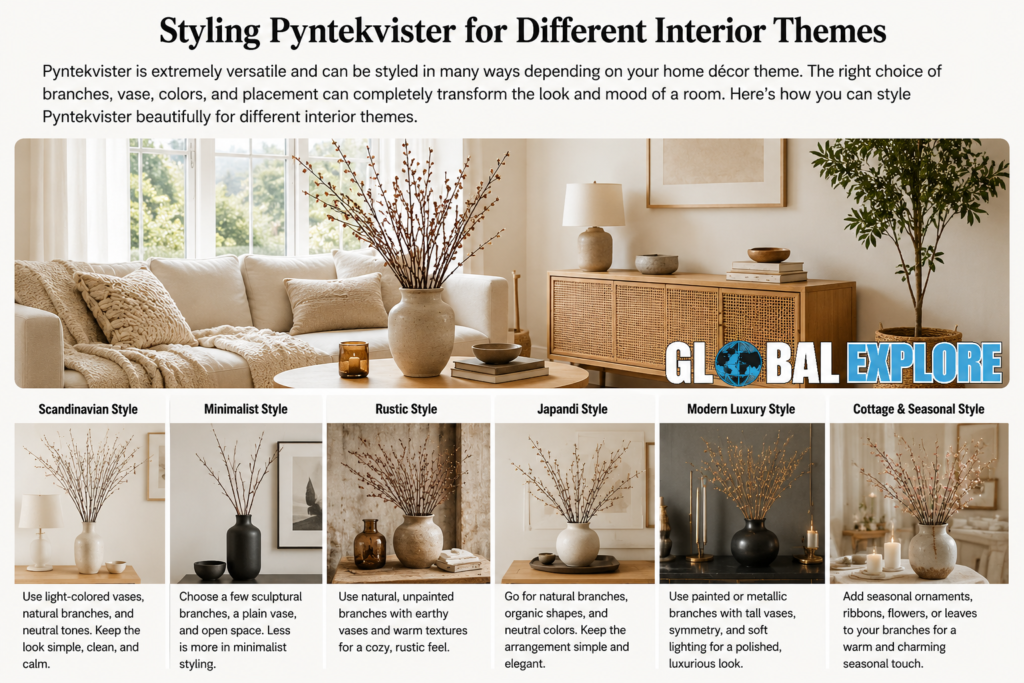
Styling Pyntekvister for Different Interior Themes
Scandinavian Style
Scandinavian interiors look best with simple, natural branch arrangements. Use:
- Light-colored vases
- Birch or willow-style branches
- Beige, cream, or soft gray surroundings
- Uncluttered placement
The goal is to create warmth through simplicity.
Minimalist Style
Minimalist rooms benefit from fewer stems and stronger structure. Instead of a full arrangement, choose:
- One sculptural branch
- Two or three tall twigs
- A plain vase
- Plenty of open surrounding space
Minimal styling makes the shape of the branches the main feature.
Rustic Style
Rustic décor works well with natural imperfections. Use:
- Unpainted branches
- Textured clay or ceramic pots
- Woven baskets nearby
- Dried grasses or earthy accessories
This style feels warm, grounded, and natural.
Japandi Style
Japandi design combines Japanese simplicity with Scandinavian comfort. Decorative branches fit this look beautifully when arranged with restraint.
Best choices include:
- Slim natural twigs
- Organic asymmetrical shapes
- Neutral matte vases
- Calm earthy colors
Modern Luxury Style
For a more elevated look, use:
- Tall black branches
- Metallic painted twigs
- Deep-toned ceramic vases
- Symmetrical arrangements
- Soft side lighting
This creates a polished decorative effect suitable for upscale interiors.
Cottage and Seasonal Style
For cozier homes, Pyntekvister can be styled with seasonal charm. Add:
- Mini ribbons
- Dried flowers
- Hanging eggs for spring
- Autumn leaves
- Small winter ornaments
This makes the arrangement feel personal and warm.
Seasonal Pyntekvister Decorating Ideas
Spring Ideas
Spring décor should feel fresh and light. Use:
- Pink blossom branches
- White flowering stems
- Light green accents
- Small hanging spring ornaments
- Pastel-toned vases
A spring Pyntekvister display can brighten a dining table, hallway, or living room shelf.
Summer Ideas
Summer arrangements should feel airy and relaxed. Try:
- Olive-style branches
- Eucalyptus stems
- Light dry grasses
- Natural clay vases
- Wicker accessories nearby
These combinations create a casual but refined warm-weather look.
Autumn Ideas
Autumn decorating often uses richer colors and more texture. Good choices include:
- Dried brown branches
- Rust-toned leaves
- Small berry accents
- Warm ceramic pots
- Beige and orange surroundings
Autumn Pyntekvister can make rooms feel cozy without relying heavily on bold seasonal décor.
Winter Ideas
Winter is one of the best seasons for decorative branches. Bare twigs, white branches, and soft LED lights create a calm and cozy atmosphere.
Useful winter styling ideas:
- LED light branches in floor vases
- White branches with mini ornaments
- Silver accents for festive rooms
- Branch displays near candles
- Entrance décor with warm lights
These displays work especially well during colder months when homes benefit from softer visual warmth.
DIY Pyntekvister: How to Make Your Own
Creating your own Pyntekvister can be simple and affordable. A handmade arrangement also gives you full control over shape, size, and color.
Materials You May Need
- Clean fallen branches or craft twigs
- A cloth or small brush
- Scissors or pruning shears
- Sandpaper if needed
- Spray paint or acrylic paint
- A vase or decorative pot
- Pebbles, stones, or sand for support
- Ribbons, lights, or ornaments if desired
Step 1: Select Good Branches
Choose branches with an attractive shape. Look for:
- Natural curves
- Balanced height
- Interesting side twigs
- Clean surfaces
Avoid branches that are:
- Moldy
- Wet
- Rotten
- Too fragile
- Covered in insects or loose bark
Step 2: Clean and Dry Them
Wipe the branches gently with a cloth. If they were collected outdoors, allow them to fully dry before bringing them into your home.
Step 3: Trim for a Better Shape
Use pruning shears to cut uneven bottoms or remove unnecessary side pieces. The arrangement should feel intentional, not random.
Step 4: Leave Natural or Paint Them
Natural branches work well for rustic and Scandinavian décor. Painted ones create a more decorative or modern appearance.
Popular paint options include:
- Matte white
- Warm beige
- Charcoal black
- Antique gold
- Silver
- Soft pastel colors
Step 5: Choose a Stable Vase
The vase should support the branches properly. Tall twigs need a heavier vase or a weighted base. Add pebbles, stones, or decorative sand if necessary.
Step 6: Add Decorative Details
Depending on the season, you can add:
- Small fairy lights
- Simple ribbons
- Mini flower clips
- Lightweight ornaments
- Paper decorations
- Dried leaves or accents
Keep the decoration balanced. Too many add-ons can make Pyntekvister look cluttered instead of elegant.
Natural vs Artificial Pyntekvister
| Feature | Natural Pyntekvister | Artificial Pyntekvister |
| Look | Organic and unique | Polished and consistent |
| Maintenance | Needs gentle care | Very easy to maintain |
| Longevity | Can become brittle | Usually lasts longer |
| Cost | Often affordable | Varies by quality |
| Seasonal Reuse | Possible | Very convenient |
| Best For | Rustic and natural décor | Everyday home styling |
Which One Is Better?
Both can be excellent, depending on your purpose.
Choose natural Pyntekvister if you want:
- Authentic texture
- Eco-inspired décor
- A handmade look
- Rustic or minimalist warmth
Choose artificial Pyntekvister if you want:
- Long-lasting styling
- Less cleaning
- Reusable décor
- More color and shape options
How to Choose the Right Vase and Arrangement
The vase is just as important as the branches. Even beautiful Pyntekvister can look awkward in the wrong container.
Match the Size Carefully
Taller branches need a vase with enough height and weight. Shorter branches look better in compact vases, bowls, or tabletop containers.
Keep the Shape Balanced
An arrangement should not lean too heavily to one side unless you intentionally want an artistic asymmetrical style.
Use the Right Material
Different vase materials create different effects:
- Ceramic: soft and elegant
- Glass: clean and airy
- Stoneware: earthy and grounded
- Metal: modern and industrial
- Woven containers: rustic and cozy
Do Not Overfill the Vase
The empty spaces between branches are part of what makes Pyntekvister attractive. Too many stems can make the display look dense and messy.
Care and Maintenance Tips
For Natural Branches
- Dust lightly with a soft cloth
- Keep them away from damp areas
- Avoid bending dried stems too much
- Store seasonal arrangements in a dry place
- Replace branches that become too brittle
For Artificial Branches
- Wipe dust from stems and leaves
- Reshape gently after storage
- Avoid crushing them under heavier items
- Keep delicate flower details clean
For LED Branches
- Check batteries or cables before use
- Store safely when not in season
- Avoid sharp bending of wired stems
- Keep outdoor models used only where suitable
Proper care helps Pyntekvister stay attractive for a longer time.
Common Mistakes to Avoid
Using Too Many Branches
A large cluster is not always better. In many cases, fewer twigs look more elegant and intentional.
Choosing a Weak Vase
Tall branches need a firm base. If the vase is too light, the display can tip over easily.
Ignoring the Room Style
A bright gold branch display may look out of place in a soft rustic room. Match the tone of the arrangement with the overall décor.
Making the Arrangement Too Busy
Lights, ribbons, flowers, and ornaments can all be beautiful, but using too many at once can ruin the refined look.
Using Natural Branches in Humid Spaces
Bathrooms and damp rooms may reduce the life of dried natural twigs. Artificial versions are often more suitable there.
Forgetting Proportion
The size of the room, vase, and furniture should guide the size of the Pyntekvister arrangement.
Frequently Asked Questions
1. What does Pyntekvister mean?
Pyntekvister means decorative twigs or branches used for styling spaces.
2. What are Pyntekvister used for?
They are used in vases, table displays, seasonal décor, and room styling.
3. Are Pyntekvister real branches?
They can be natural branches or artificial decorative stems.
4. Can Pyntekvister be used indoors?
Yes, they are commonly used in homes, offices, and event spaces.
5. Can Pyntekvister be used outdoors?
Yes, especially outdoor-safe or LED decorative branch designs.
6. Which branches are best for Pyntekvister?
Birch, willow, eucalyptus-style stems, olive branches, and blossom branches are popular.
7. Are Pyntekvister good for minimalist décor?
Yes, their simple shapes fit minimalist and Scandinavian rooms well.
8. How do you style Pyntekvister in a vase?
Use a stable vase, avoid overcrowding, and keep the arrangement balanced.
9. Can Pyntekvister be used for seasonal decoration?
Yes, they work well for spring, autumn, winter, and festive displays.
10. How do you clean Pyntekvister?
Dust them gently with a soft cloth or brush.
Conclusion
Pyntekvister is a simple yet elegant decorative idea that uses twigs, branches, and stems to enhance living spaces. Its charm comes from its natural appearance, flexible styling, and ability to work across different interior themes. Whether displayed in a modern ceramic vase, used as a seasonal table feature, or arranged with soft LED lights, Pyntekvister can add height, texture, and personality to a room without making it feel crowded.
It is also a practical décor choice. You can create it yourself, choose natural branches, buy artificial designs, or update the look throughout the year with small seasonal details. From Scandinavian homes to rustic rooms and modern offices, Pyntekvister remains a versatile way to bring subtle beauty and thoughtful design into everyday spaces.
If you enjoyed this article, read more about How to Find the Best Cocido Gallego Near You.
Updated: May 2026
globalexplore.co.uk