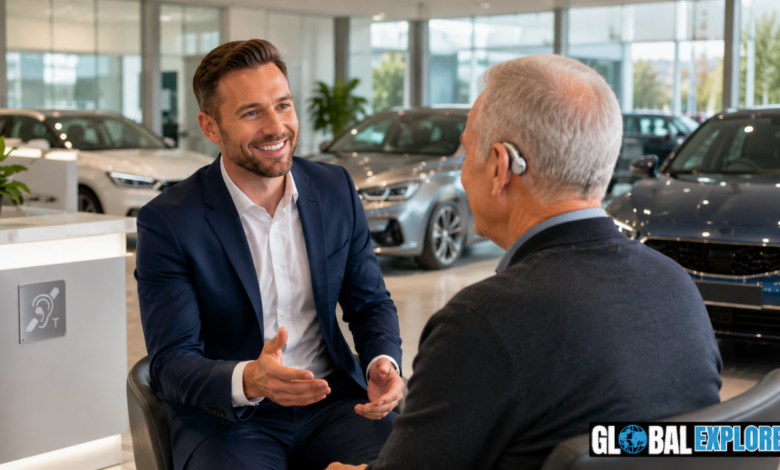
A car dealership with hearing loop is an automotive showroom, service centre, or sales office that uses hearing loop technology to make conversations clearer for customers who use compatible hearing aids or cochlear implants. Instead of forcing customers to struggle with background noise, echo, showroom music, phones, and multiple conversations, the hearing loop sends speech more directly to the customer’s hearing device.
This matters because buying a car is not a simple everyday purchase. Customers need to understand prices, deposits, finance agreements, part-exchange values, warranties, service plans, delivery times, optional extras, electric vehicle charging details, and insurance-related information. If a customer cannot hear clearly, they may miss important details that affect their decision.
A hearing loop can be installed in different parts of a dealership, such as the reception desk, sales desk, service counter, finance office, customer waiting area, or private consultation room. Some dealerships may use a permanent hearing loop, while others may offer a portable system for one-to-one conversations.
The goal is simple: clearer, fairer, and more comfortable communication for every customer.
How Hearing Loop Technology Works
A hearing loop is also known as an induction loop or audio-frequency induction loop system. It usually includes a microphone, an amplifier, and a loop of wire placed around a specific area. When a staff member speaks into the microphone, the system converts that sound into a magnetic signal. A hearing aid or cochlear implant with a telecoil, also called a T-coil, can receive that signal and turn it back into sound.
For the customer, this can make the salesperson’s voice much easier to hear. The hearing device focuses more on the sound coming from the loop system and less on the noise around the room.
In a busy car dealership, that difference can be huge. Showrooms often have hard floors, glass walls, open spaces, moving vehicles, ringing phones, coffee machines, background music, and several staff members talking at once. These sounds may seem normal to many visitors, but they can make speech difficult to follow for people with hearing loss.
A hearing loop helps by improving speech clarity in a defined listening area. It does not replace polite communication or good customer service, but it gives customers a better chance to hear important information without stress.
Why Hearing Accessibility Matters in Car Dealerships
Car dealerships depend on communication. A customer may speak to several people during one visit, including a receptionist, sales adviser, finance manager, service adviser, technician, insurance representative, and handover specialist. Each conversation may involve important details.
For customers with hearing loss, this process can become tiring. They may need to ask staff to repeat information again and again. They may avoid asking extra questions because they feel embarrassed. Some may bring a family member to help interpret the conversation, even when they would prefer to handle the purchase independently.
A car dealership with hearing loop helps remove that pressure. It allows customers to take part in the buying process with more confidence and privacy. They can ask questions, compare options, understand paperwork, and make decisions without feeling left out.
Accessibility is not only about physical access. Ramps, wide doors, disabled parking spaces, and step-free entrances are important, but communication access is just as important. A customer who can enter the showroom but cannot follow the conversation is still facing a barrier.
Clear communication is part of a respectful car-buying experience.
Where Hearing Loops Should Be Used in a Dealership
A dealership does not always need a loop in every corner of the building to make a meaningful difference. The most important areas are the places where detailed conversations happen.
Reception Desk
The reception desk is often the first point of contact. Customers may ask where to check in, who they need to speak to, how long an appointment will take, or where to wait. A hearing loop at reception helps the visit start smoothly.
Sales Desk
The sales desk is where customers discuss vehicle options, trim levels, engine choices, colours, delivery times, prices, and offers. A hearing loop here supports clearer and more confident decision-making.
Finance Office
The finance office is one of the most important areas for hearing accessibility. Finance agreements can include monthly payments, interest rates, mileage limits, deposits, balloon payments, early settlement terms, and end-of-contract options. A customer must be able to hear these details clearly before signing.
Service Counter
Customers visiting for servicing or repairs need to understand faults, costs, timescales, safety concerns, parts availability, and warranty coverage. Misunderstanding a repair recommendation can cause frustration later, so a hearing loop at the service counter can be very helpful.
Customer Waiting Area
If announcements are made in the waiting area, a hearing loop or visual display can help customers know when their vehicle is ready or when a staff member needs to speak to them.
Private Consultation Room
A quiet room with hearing loop access is ideal for detailed or sensitive discussions. It can be used for finance paperwork, complaints, accessibility needs, or complex vehicle handovers.
Benefits for Deaf and Hard-of-Hearing Car Buyers
Choosing a car dealership with hearing loop can improve the whole customer journey.
Clearer Conversations
The main benefit is clearer speech. Customers can focus on the staff member’s voice instead of fighting against showroom noise.
Better Understanding of Costs
Car buying often involves many numbers. A hearing loop can help customers better understand prices, monthly payments, deposits, fees, warranties, and service costs.
More Confidence During Negotiation
Negotiating a car price can be stressful even without hearing difficulties. When a customer hears clearly, they can respond more confidently and ask better questions.
Greater Independence
Some hard-of-hearing customers rely on friends or relatives to repeat information. A hearing loop can reduce that dependence and allow the customer to speak for themselves.
Less Listening Fatigue
Trying to follow speech in a noisy place can be exhausting. Hearing loop technology can make the visit feel less draining.
More Privacy
Finance and personal details should not always be repeated loudly across a showroom. A hearing loop can help staff speak normally while still being understood.
Benefits for Dealerships and Staff

Hearing loops do not only help customers. They can also benefit dealership teams.
Better Customer Satisfaction
Customers who feel understood are more likely to trust the dealership. They are also more likely to return for servicing, recommend the business, and leave positive reviews.
Fewer Misunderstandings
Clearer communication reduces the risk of confusion about prices, repair work, finance terms, or appointment details.
Stronger Reputation
A dealership that supports hearing accessibility can stand out from competitors. It shows that the business welcomes a wider range of customers and takes inclusion seriously.
More Professional Service
Staff do not need to shout or repeat the same information many times. A working loop system, combined with good communication habits, helps the conversation feel smoother.
Support for Older Customers
Many older buyers experience some level of hearing difficulty. They may not identify as deaf or hard of hearing, but they may still appreciate a quieter and clearer conversation.
How to Find a Car Dealership with Hearing Loop Near You
Finding a dealership with hearing loop technology may take a little research because not every dealership clearly advertises its accessibility features.
Start by searching for terms such as:
car dealership with hearing loop near me
accessible car dealership
deaf-friendly car dealership
hearing aid friendly car showroom
assistive listening system dealership
You can also check a dealership’s website. Look for pages called Accessibility, Facilities, Customer Support, Visit Us, or Contact. Some dealerships mention hearing loops, quiet rooms, wheelchair access, disabled parking, or communication support in these sections.
Google Business Profile may also help. Some businesses can show accessibility attributes, including whether they have an assistive hearing loop. However, it is still wise to contact the dealership before visiting, because equipment may be limited to certain areas.
Local hearing loss charities, audiologists, community groups, and accessibility directories may also know which businesses are genuinely hearing-friendly.
What to Ask Before Visiting the Showroom
Before visiting, call, email, or message the dealership and ask clear questions.
You can ask:
Do you have a hearing loop installed?
Is the hearing loop permanent or portable?
Which areas of the dealership are covered?
Is the loop available at the sales desk, finance office, and service counter?
Are staff trained to use it?
Is there a quiet room for detailed discussions?
Can important details be provided in writing?
Can I communicate by email or text before and after the visit?
Can I book a quieter appointment time?
Do you offer captioned video calls or written summaries?
These questions help you find out whether the dealership truly supports accessible communication or only mentions accessibility in a general way.
A real hearing-friendly dealership should answer these questions clearly and respectfully.
Hearing Loop vs Other Accessibility Tools
| Accessibility Tool | Best For | Main Benefit |
| Hearing loop | Hearing aid and cochlear implant users with telecoil | Sends clearer sound directly to the hearing device |
| Portable loop | One-to-one conversations | Flexible support at desks or temporary locations |
| Written summaries | Finance, warranties, repairs, prices | Gives customers a clear record of important details |
| Quiet room | Private discussions | Reduces background noise and distractions |
| Live captions | Video calls or group conversations | Converts speech into readable text |
| Sign language interpreter | Deaf customers who use sign language | Provides full language access |
| Email or text support | Pre-visit and aftersales communication | Allows customers to review details at their own pace |
| Visual display screens | Waiting areas and service updates | Helps customers follow announcements without relying on sound |
A hearing loop is powerful, but it should not be the only support option. The best accessible dealerships combine technology with patience, written information, and flexible communication.
Best Practices for Accessible Car Dealerships
A dealership that wants to serve deaf and hard-of-hearing customers properly should do more than install equipment.
Display Clear Hearing Loop Signs
Customers need to know the system is available. The international hearing loop symbol usually shows an ear with the letter “T”. Signs should be placed at reception, sales desks, service counters, and any rooms where loops are available.
Train Staff Properly
Staff should know what a hearing loop is, where it works, and how to help customers use it. They should not look confused when a customer asks about it.
Keep the System Switched On and Tested
A hearing loop that does not work is worse than no loop at all because it creates false confidence. Dealerships should test the system regularly and fix problems quickly.
Speak Clearly Without Shouting
Shouting can distort speech and feel disrespectful. Staff should speak clearly, face the customer, and avoid covering their mouth.
Offer Written Confirmation
Important details should be given in writing. This includes finance terms, vehicle specifications, service costs, delivery dates, and warranty coverage.
Provide Quiet Appointment Times
Some customers may prefer early morning, weekday, or appointment-only visits when the showroom is less crowded.
Use Good Lighting
Many people with hearing loss also use lip-reading or facial expressions to support understanding. Bright, even lighting helps communication.
Ask About Communication Preferences
The best question a staff member can ask is simple: “How would you prefer us to communicate with you today?”
Common Mistakes Dealerships Should Avoid
Some dealerships want to be accessible but make simple mistakes that reduce the value of their hearing loop system.
Installing a Loop but Not Training Staff
If staff do not understand the system, customers may not be able to use it. Training is essential.
Hiding the Hearing Loop Sign
A small sign behind a desk is not enough. Customers should see the accessibility support before they need to ask for it.
Assuming Every Hearing Aid Has a T-Coil
Not every hearing aid has a telecoil activated. Staff should offer alternatives such as written notes, quiet rooms, captions, or email summaries.
Using the Loop Only at Reception
Reception access is helpful, but the most important conversations often happen in sales, finance, and service areas.
Speaking Too Fast
Even with technology, fast speech can be hard to follow. Staff should slow down slightly and check understanding.
Ignoring Aftersales Support
Accessibility should not end after the car is sold. Service bookings, MOT reminders, warranty repairs, and complaint handling should also be accessible.
Why Hearing Loops Are Especially Useful During Finance Discussions
Finance discussions are one of the strongest reasons a car dealership with hearing loop can be valuable. Vehicle finance can include personal contract purchase, hire purchase, leasing, interest rates, payment schedules, mileage limits, excess mileage charges, deposits, final payments, and ownership options.
These details can affect a customer for several years. No customer should sign a finance agreement while unsure about what they heard. A hearing loop in the finance office supports better understanding and helps the customer ask questions before making a commitment.
Dealerships should also provide printed or digital copies of all key terms. The hearing loop helps with the live conversation, while written information helps the customer review details calmly.
Why Service Departments Also Need Hearing Accessibility
Many articles focus only on buying a car, but servicing is just as important. Customers often return to the same dealership for maintenance, repairs, MOT work, warranty claims, recalls, tyre checks, software updates, and diagnostics.
A hard-of-hearing customer may need to understand what work is urgent, what can wait, how much it will cost, and when the car will be ready. If the service counter is noisy, misunderstandings can happen quickly.
A hearing loop at the service desk can make these conversations clearer. Written estimates, text updates, and visual service reports can make the experience even better.
How Customers Can Prepare for a Better Visit
Customers can also take simple steps to make the visit easier.
Book an appointment instead of walking in during busy hours.
Tell the dealership about communication needs in advance.
Ask for a quiet desk or private room.
Check whether your hearing aid has a T-coil setting.
Bring a written list of questions.
Ask for all figures and terms in writing.
Request email confirmation after the visit.
Avoid weekend rush hours if possible.
A good dealership will not make you feel difficult for asking. Accessibility is part of professional customer service.
What Makes a Dealership Truly Hearing-Friendly?
A truly hearing-friendly dealership is not just a place with equipment. It is a place where customers feel comfortable, respected, and informed.
Look for these signs:
Hearing loop signs are visible.
Staff know how the loop works.
The dealership answers accessibility questions confidently.
There is support at sales, finance, and service points.
Written information is offered without complaint.
Staff face customers when speaking.
Quiet areas are available.
The website includes accessibility information.
Reviews mention good customer care.
The dealership welcomes feedback.
The best accessible dealerships combine technology, training, and empathy.
Frequently Asked Questions
What is a car dealership with hearing loop?
A car dealership with hearing loop is a showroom or service centre that uses hearing loop technology to help customers with compatible hearing aids or cochlear implants hear conversations more clearly.
How does a hearing loop help in a car showroom?
It reduces the effect of background noise by sending the speaker’s voice more directly to the customer’s hearing device, making sales, finance, and service conversations easier to follow.
Do all hearing aids work with hearing loops?
No, a hearing aid usually needs an active telecoil or T-coil setting to connect with a hearing loop. Customers can ask their audiologist if their device supports it.
Where should a dealership install a hearing loop?
The most useful areas are reception desks, sales desks, finance offices, service counters, waiting areas, and private consultation rooms.
How can I find a car dealership with hearing loop near me?
Search online, check dealership accessibility pages, review Google Business Profile details, contact local hearing support groups, and call the dealership before visiting.
Is a hearing loop enough for full accessibility?
A hearing loop is helpful, but the best dealerships also offer written summaries, quiet rooms, trained staff, clear signage, email support, and flexible communication options.
Conclusion
A car dealership with hearing loop makes the car-buying and servicing experience clearer, calmer, and more inclusive for people with hearing loss. It helps customers understand important conversations about pricing, finance, warranties, repairs, and vehicle features without struggling against showroom noise.
For buyers, hearing loop access can mean more confidence, independence, privacy, and comfort. For dealerships, it shows professionalism, care, and a real commitment to serving every customer properly.
The best accessible dealerships do not rely on technology alone. They combine hearing loops with trained staff, clear signs, quiet spaces, written information, and respectful communication. That is what turns a basic showroom into a truly welcoming place.
If you are a customer, ask about hearing loop access before your visit. If you are a dealership owner, consider hearing accessibility as part of excellent customer service. Clear communication helps everyone make better decisions.
If you enjoyed this article, read more about What Is a Bird Strike and Why Is It Serious?
Updated: May 2026
Globalexplore.co.uk