Locro de zapallo is a warm, creamy, and deeply comforting squash-based stew most commonly associated with Peruvian and Andean cooking. The word “zapallo” refers to squash or pumpkin, while “locro” generally refers to a thick stew. Together, the dish becomes a rich bowl of soft squash, potatoes, corn, peas, beans, onions, garlic, herbs, and often cheese or milk.
The dish is popular because it feels homemade, filling, and nourishing without being complicated. It is the kind of meal people search for when they want something different from standard restaurant food. Instead of being flashy or overly modern, locro de zapallo is humble, hearty, and full of cultural character.
When people type Best Locro de Zapallo Near Me, they are usually not only looking for any restaurant. They are looking for a place that serves a bowl with real texture, balanced flavor, fresh ingredients, and a traditional feel. A good locro should taste like it was cooked with care, not rushed from a frozen mix or watered-down soup base.
Why People Search for the Best Locro de Zapallo Near Me
The search for Best Locro de Zapallo Near Me is mainly driven by local food intent. People want to eat the dish nearby, but they also want to understand what makes one bowl better than another. Since locro de zapallo is not always available at every South American or Peruvian restaurant, searchers often need guidance on where to look and what to expect.
Some users may have tried the dish before in Peru, Ecuador, Bolivia, Argentina, or a family kitchen. Others may have discovered it through food blogs, social media, travel videos, or restaurant menus. The phrase “near me” shows that the person is ready to take action. They may want lunch, dinner, takeaway, delivery, or a nearby restaurant recommendation.
The challenge is that locro de zapallo may appear under different names. Some menus call it Peruvian squash stew, pumpkin stew, Andean stew, or zapallo stew. That means a smart searcher should not only search the exact dish name but also related terms.
What Makes Locro de Zapallo So Special?
The beauty of locro de zapallo is its balance. It is creamy but not heavy, simple but flavorful, and mild but never boring. The squash gives natural sweetness, while onion, garlic, ají amarillo, herbs, cheese, and vegetables create depth.
A great bowl has a soft golden color, thick body, and comforting aroma. It should not feel like a thin soup. It should also not feel like plain mashed pumpkin. The best version sits somewhere in between: soft enough to be spoonable, chunky enough to feel rustic, and flavorful enough to stand as a complete meal.
The best locro de zapallo near you should feel homemade, not factory-made. That is the biggest difference between a memorable bowl and an average one.
Another reason people love this dish is its flexibility. It can be vegetarian, cheesy, spicy, mild, vegan, or served with rice, egg, fish, or meat depending on the region and restaurant style. This makes it suitable for many diners, from comfort-food lovers to people looking for a warm vegetable-based meal.
Key Ingredients That Define an Authentic Bowl
A proper locro de zapallo starts with squash or pumpkin. In Peru, zapallo macre is often used, but outside South America, restaurants may use butternut squash, kabocha squash, pumpkin, or another firm orange squash. The important thing is that the squash should have natural sweetness, smooth texture, and enough body to thicken the stew.
Other common ingredients include:
| Ingredient | Why It Matters |
| Zapallo, pumpkin, or squash | Gives the stew its main flavor, color, and body |
| Potatoes | Add thickness and heartiness |
| Corn | Brings sweetness and texture |
| Peas or beans | Add protein, color, and substance |
| Onion and garlic | Build the savory base |
| Ají amarillo | Adds Peruvian flavor, gentle heat, and aroma |
| Milk or evaporated milk | Creates creaminess in traditional versions |
| Queso fresco or white cheese | Adds richness and salty balance |
| Huacatay or cilantro | Adds fresh herbal flavor |
| White rice | Common side that makes the meal more filling |
Not every bowl must contain every ingredient, but the core should feel balanced. If the dish only tastes like plain pumpkin, it is missing depth. If it tastes only like cheese or cream, the squash has been overpowered.
How to Find the Best Locro de Zapallo Near Me
Finding the Best Locro de Zapallo Near Me requires more than typing the keyword once and choosing the first result. Because the dish can be listed under several names, you should search with different phrases and check menus carefully.
Start with searches like:
- Best locro de zapallo near me
- Peruvian squash stew near me
- Peruvian pumpkin stew near me
- Authentic Peruvian restaurant near me
- Andean food near me
- South American stew near me
- Zapallo stew near me
Next, check restaurants that serve Peruvian, Bolivian, Ecuadorian, Argentine, or broader South American food. Peruvian restaurants are often the strongest choice, but family-owned Latin American restaurants may also serve excellent locro as a seasonal or daily special.
Do not rely only on star ratings. A restaurant can have good overall ratings but not serve authentic locro de zapallo. Instead, read reviews and look for specific words like “homemade,” “traditional,” “creamy,” “fresh,” “Peruvian,” “comforting,” “thick,” “flavorful,” and “authentic.”
Also check photos. A good locro usually has a warm yellow-orange color, visible vegetables, and a thick consistency. If photos show a watery soup with little texture, it may not be the best option.
What Authentic Locro de Zapallo Should Taste Like
Authentic locro de zapallo should taste warm, earthy, slightly sweet, and savory. The squash should be the star, but it should be supported by garlic, onion, herbs, cheese, and gentle chili flavor. It should not taste bland, overly salty, or artificially creamy.
The texture is one of the biggest signs of quality. A good bowl should be thick and soft, with some squash and potato pieces partly broken down. You may also notice corn, peas, beans, or cheese cubes depending on the version.
The flavor should feel layered. First, you get the natural sweetness of squash. Then comes the savory base from onion and garlic. After that, the creaminess from milk or cheese adds comfort. Finally, ají amarillo or herbs may leave a gentle warmth.
The best version should taste rich without feeling greasy. If the stew feels oily, watery, or flat, it probably was not prepared with enough care.
Restaurant Signs That Show Quality
A restaurant serving excellent locro de zapallo usually shows some clear quality signs.
First, it may describe the dish with specific ingredients. A menu that mentions squash, ají amarillo, queso fresco, corn, peas, potatoes, or rice is usually more promising than a vague listing that says only “pumpkin soup.”
Second, the restaurant may offer other traditional Peruvian dishes such as lomo saltado, ají de gallina, causa, arroz con pollo, papa a la huancaína, tallarines verdes, seco, or ceviche. A kitchen that understands Peruvian comfort food is more likely to prepare locro well.
Third, family-owned restaurants and smaller local spots often make locro with a more homemade style. Large commercial restaurants can still serve good food, but locro de zapallo benefits from slow cooking and personal preparation.
Fourth, check whether the restaurant changes specials seasonally. Locro is often offered during cooler months or as a lunch special. If a restaurant posts daily specials, it may be worth calling and asking whether locro is available.
Red Flags to Avoid Before Ordering
Not every bowl labeled locro de zapallo is worth ordering. Some restaurants may use shortcuts that reduce flavor and texture.
Watch for these red flags:
| Red Flag | What It May Mean |
| Very watery texture | The stew may be diluted or rushed |
| No visible vegetables | It may be closer to plain soup than locro |
| No mention of squash or pumpkin | The dish may not be clearly prepared |
| Overly bright artificial color | It may rely on coloring instead of ingredients |
| Too much cream | The squash flavor may be hidden |
| No fresh herbs or garnish | The dish may lack balance |
| Reviews mention bland flavor | The seasoning may be weak |
| Menu only says “pumpkin soup” | It may not be traditional locro |
A good restaurant should be able to explain what is in the dish. If staff cannot describe it at all, that does not always mean the dish is bad, but it is a reason to be careful.
Peruvian, Andean, and Regional Variations
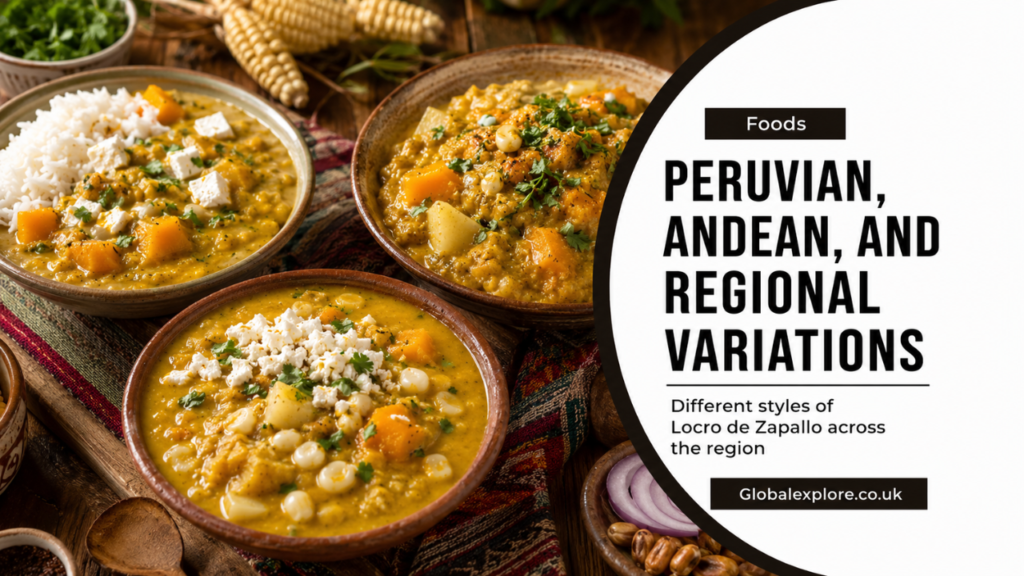
Locro de zapallo is strongly connected with Peruvian cuisine, but similar squash and stew traditions appear across the Andean region. This means you may find different versions depending on the restaurant’s background.
A Peruvian-style locro often includes squash, potatoes, corn, peas, milk, cheese, ají amarillo, and rice. It may be vegetarian or served with fried egg, fish, or meat.
An Ecuadorian-style locro may feel closer to a potato-based soup or stew and can include cheese, milk, avocado, or regional herbs. It may be lighter or more soup-like depending on the kitchen.
Bolivian versions can vary by region and may include local squash, potatoes, cheese, herbs, and sometimes broader Andean ingredients.
Argentine locro is usually different from locro de zapallo. It is often a heavier stew with corn, beans, pumpkin, beef, pork, sausage, or tripe. If you are specifically looking for locro de zapallo, check that the dish is squash-forward and not only the Argentine national-style locro.
The word “locro” can mean different things in different countries, so always check the description before ordering.
Is Locro de Zapallo Healthy?
Locro de zapallo can be a nutritious and filling dish, especially when made with fresh squash, potatoes, corn, peas, beans, herbs, and moderate dairy. Squash provides natural sweetness and body, while potatoes and legumes make the dish more satisfying.
However, the health value depends on preparation. A bowl made with fresh vegetables and balanced dairy can be wholesome. A version loaded with excessive cream, oil, salt, or processed cheese may feel much heavier.
For a lighter option, ask whether the restaurant offers a vegetarian version, less cheese, or a smaller portion with salad. For a more filling meal, order it with rice, egg, or a protein side.
The best approach is balance. Locro de zapallo is not meant to be a strict diet food. It is comfort food with real ingredients. When prepared well, it can be both satisfying and nourishing.
Vegetarian, Vegan, and Dairy-Free Options
Many versions of locro de zapallo are naturally vegetarian because the main ingredients are squash, potatoes, corn, peas, beans, milk, and cheese. However, some restaurants may use chicken stock, beef stock, pork, or meat garnish, so vegetarians should ask before ordering.
A vegan version is possible, but it requires replacing milk and cheese. Some modern kitchens use coconut milk, cashew cream, vegetable stock, or simply allow the squash and potatoes to create natural creaminess.
If you want a dairy-free version, ask:
- Is the locro made with milk?
- Does it include cheese?
- Is the base vegetable stock or meat stock?
- Can it be served without cheese?
- Is butter used in the cooking base?
Do not assume it is vegan just because it looks vegetable-based. Traditional versions often include milk, cheese, or butter.
What to Eat with Locro de Zapallo
Locro de zapallo is filling enough to be eaten on its own, but it is often better with the right side dish. The most common pairing is white rice. Rice balances the creamy stew and makes the meal more complete.
Other good pairings include:
- Fried egg
- Fried fish
- Grilled chicken
- Fresh bread
- Simple salad
- Avocado
- Ají sauce
- Roasted vegetables
- Queso fresco
- Lime on the side
If you are trying it for the first time, order it with rice and a fresh side. This gives you the most traditional and balanced experience. If you like richer meals, choose a version with egg or cheese. If you prefer lighter meals, ask for less cheese and more vegetables.
What to Ask Before Ordering
When you call or visit a restaurant, ask simple questions. This helps you avoid disappointment and shows whether the restaurant really knows the dish.
Useful questions include:
- Do you serve locro de zapallo today?
- Is it Peruvian-style?
- Is it made with squash or pumpkin?
- Does it include ají amarillo?
- Is it vegetarian?
- Does it contain milk or cheese?
- Is it served with rice?
- Is it a daily special or regular menu item?
- Can it be ordered for takeaway?
- Is it spicy or mild?
These questions are especially useful because locro may not always appear on the online menu. Some restaurants prepare it only on certain days, during colder months, or as a lunch special.
How to Read Online Reviews Before Choosing a Restaurant
When searching for Best Locro de Zapallo Near Me, reviews can help, but only if you read them carefully. Do not just look at the rating number. Instead, search inside reviews for specific dish names and related words.
Look for reviews that mention:
- Locro
- Zapallo
- Squash stew
- Pumpkin stew
- Peruvian stew
- Homemade food
- Authentic Peruvian
- Comfort food
- Fresh ingredients
- Family-owned
- Traditional menu
Photos are also important. A strong locro photo usually shows a thick golden stew with visible texture. If every photo looks like a thin yellow liquid, the dish may not match the traditional style.
Also check recent reviews. A restaurant may have been excellent two years ago but changed chefs, menu, or quality. Recent comments are more useful when choosing where to eat today.
Best Places to Look for Locro de Zapallo Locally
You may find locro de zapallo in several types of places.
Peruvian restaurants are the best first choice. They are most likely to understand ají amarillo, queso fresco, rice pairings, and traditional Peruvian comfort dishes.
South American restaurants may also serve it, especially if they include Andean dishes.
Latin American cafes sometimes offer homemade stews as specials, even if locro is not always on the main menu.
Food markets and small family kitchens can be excellent places to find traditional locro. In some cities, the most authentic version may come from a small local food stall rather than a polished restaurant.
Catering businesses may also prepare locro for events, especially if they specialize in Peruvian or Andean food.
What to Do If You Cannot Find It Nearby
If you cannot find locro de zapallo near you, do not stop at the exact keyword. Search broader terms and call restaurants directly. Many places may serve similar dishes but use different menu names.
Try asking Peruvian restaurants whether they can prepare locro as a special order. Some kitchens may make it for catering, family trays, or weekend specials even if it is not listed online.
You can also look for dishes with similar flavors, such as:
- Peruvian pumpkin stew
- Butternut squash stew
- Andean vegetable stew
- Creamy squash soup
- Ají amarillo vegetable stew
- Vegetarian Peruvian stew
If you still cannot find it, making it at home is realistic. The dish does not require advanced cooking skills. You mainly need squash, potatoes, corn, peas, onion, garlic, ají amarillo if available, milk or cheese if desired, and rice for serving.
Simple Home-Style Locro de Zapallo Idea
If no nearby restaurant serves it, you can make a simple home-style version. Start by cooking onion and garlic in a pot until soft. Add ají amarillo paste if you have it. Add cubed squash, potatoes, corn, peas, and vegetable stock. Simmer until the squash and potatoes soften. Mash some of the squash into the liquid to thicken the stew. Add milk or cheese near the end if you want a creamy traditional flavor.
Serve it hot with white rice, fresh herbs, and a little queso fresco. The result may not be exactly the same as a restaurant in Peru, but it can still deliver the comfort and warmth that makes the dish special.
Why Fresh Ingredients Matter
Locro de zapallo depends heavily on ingredient quality. Since the recipe is simple, every ingredient matters. Fresh squash gives natural sweetness and color. Good potatoes create body. Corn adds texture. Fresh garlic and onion make the base aromatic. Ají amarillo gives the dish its Peruvian identity.
A restaurant that uses fresh vegetables will usually produce a brighter, richer, and more satisfying bowl. A restaurant using frozen shortcuts or weak seasoning may still create something edible, but it will not feel memorable.
The best locro de zapallo near you will usually taste fresh, warm, and balanced from the first spoonful.
Frequently Asked Questions
What is locro de zapallo made of?
Locro de zapallo is usually made with squash or pumpkin, potatoes, corn, peas, beans, onion, garlic, herbs, milk, cheese, and sometimes ají amarillo.
Where can I find the best locro de zapallo near me?
Look for Peruvian, Andean, or family-owned South American restaurants, then check menus, photos, and reviews for homemade squash stew or pumpkin stew.
Is locro de zapallo vegetarian?
Many versions are vegetarian, but you should ask because some restaurants may use meat stock, chicken stock, or serve it with meat or fish.
Does locro de zapallo taste spicy?
It is usually mild to medium. Ají amarillo can add warmth and flavor, but the dish should not be painfully spicy.
What should I eat with locro de zapallo?
White rice is the most common pairing, but it also goes well with fried egg, fish, bread, salad, avocado, or queso fresco.
Can I make locro de zapallo at home?
Yes. You can make it with squash, potatoes, corn, peas, onion, garlic, stock, milk or cheese, and rice for serving.
Conclusion
Finding the Best Locro de Zapallo Near Me is about more than choosing the closest restaurant. The best bowl should be creamy, warm, thick, naturally sweet, savory, and full of fresh ingredients. It should taste comforting without being bland, rich without being greasy, and traditional without feeling heavy or artificial.
To find the right place, search beyond the exact keyword, check Peruvian and South American restaurants, read reviews carefully, look at food photos, and ask whether the dish is made with squash, potatoes, corn, ají amarillo, milk, cheese, or rice. A good locro de zapallo should feel like a homemade meal prepared with patience and respect for tradition.
If you cannot find it nearby, you can still enjoy the dish at home with simple ingredients and a slow-cooked approach. Whether you order it from a local Peruvian restaurant or prepare it yourself, locro de zapallo remains one of the most comforting and underrated dishes in Andean cuisine.
If you enjoyed this article, read more about Key Ingredients That Create the Signature Flavour
Updated: May 2026
Globalexplore.co.uk