Key clamps are a versatile and essential solution for building handrails, barriers, and modular structures in both commercial and residential projects. Widely used in the UK, they offer a practical alternative to welding or threaded fittings. Their modular design allows for quick assembly, adaptability, and long-lasting performance, making key clamps a favourite among builders and DIY enthusiasts.
The popularity of key clamps in the UK stems from their simplicity and reliability. Constructing secure handrails or safety barriers with minimal tools saves time and reduces installation errors. Additionally, key clamps are highly reusable, allowing modifications to structures without significant cost or effort. For safety-critical applications, choosing the right key clamp ensures compliance with UK building standards.
What is a Key Clamp?
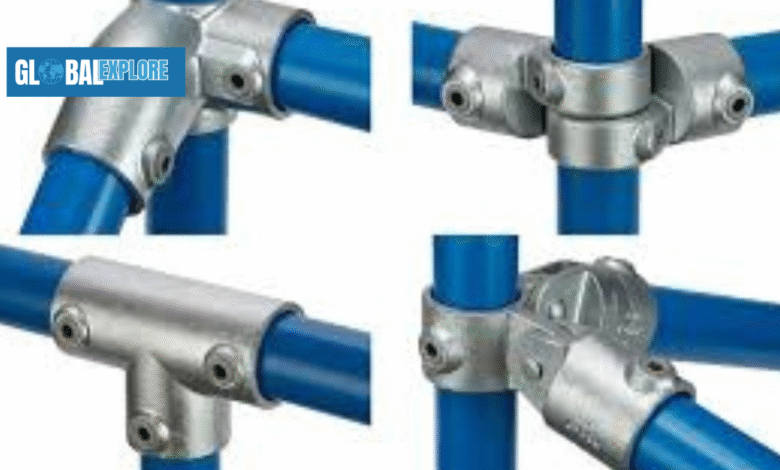
A key clamp is a structural pipe fitting designed to join steel or galvanised tubes securely, enabling the construction of frameworks, handrails, barriers, and furniture. Key clamps are manufactured to withstand heavy loads and resist corrosion, making them ideal for indoor and outdoor applications. Their unique design eliminates the need for welding, making assembly straightforward and safe.
The key clamp’s versatility extends to various industries, including retail, industrial, and DIY construction. By using set screws to tighten the fitting around tubing, the clamp creates a durable and stable connection. This adaptability allows builders to create customised structures quickly, making key clamps an essential component for modular handrails, pedestrian barriers, and garden frameworks.
Types of Key Clamp Fittings
Key clamp fittings come in several types, each designed for specific construction purposes. Elbows allow angled connections, while tees provide a junction for three tubes. Cross fittings are suitable for complex frameworks, and reducers enable joining of different diameter tubes. Flanges anchor tubes to walls or floors, enhancing stability in handrail installations.
In the UK, key clamp types are selected based on project requirements. Handrail systems often require a combination of elbows and tees to create secure barriers, while DIY furniture may use smaller fittings for shelving or tables. The wide range of key clamp fittings ensures compatibility with most UK-standard tubing, giving users the flexibility to design modular and safe structures.
Key Clamp Sizes and Specifications
Key clamps are available in multiple sizes to fit standard UK tubing, such as 42.4mm, 48.3mm, and 60.3mm. Choosing the correct size is crucial for structural integrity, as incorrect fittings can compromise the strength of handrails or barriers. Each size supports a specific load capacity, ensuring safety and reliability for both commercial and domestic projects.
Galvanised steel key clamps are particularly valued for their high load-bearing capacity and resistance to corrosion. UK suppliers provide detailed specifications for each clamp, including recommended torque and maximum axial load. Understanding these specifications allows builders and DIY enthusiasts to select the correct key clamp, ensuring the finished structure meets safety and durability standards.
Uses and Applications of Key Clamps
Key clamps are widely used in the construction of handrails, pedestrian barriers, safety fencing, and modular structures across the UK. Their strength, simplicity, and reusability make them ideal for both commercial and residential projects. Public spaces, industrial facilities, and schools frequently rely on key clamps to create safe and compliant handrail systems.
DIY enthusiasts also benefit from the flexibility of key clamps. They are perfect for building furniture, shelving units, garden structures, and bespoke modular frameworks. The ease of installation, combined with the ability to modify designs without welding, makes key clamps a practical and cost-effective choice. They allow users to create sturdy and creative projects without specialised skills.
Installing Key Clamps Safely
Safe installation of key clamps begins with accurate measurement and planning. Base fittings must be secured correctly, followed by vertical and horizontal tubing, ensuring alignment at every step. Set screws should be tightened to the manufacturer’s specifications to prevent slippage or instability. Careful installation guarantees long-term reliability for handrails and barriers.
Regular inspection and maintenance are essential for safety. Key clamps should be checked periodically for loose screws, corrosion, and wear, especially in high-traffic areas. Following UK building regulations and the manufacturer’s guidelines ensures that handrails and barriers remain secure, reducing the risk of accidents. Safety compliance is particularly important in public spaces and industrial settings.
Buying Key Clamps in the UK
Key clamps can be purchased through UK-based suppliers, both online and in-store. Trusted brands such as Kee Systems, Alvin Key Clamp, and Key Clamp Store offer a wide range of fittings, tubes, and complete kits. Buyers should prioritise quality and compatibility with UK-standard tubing to ensure safe and durable installations.
When selecting key clamps, consider the type, size, and intended application. High-quality fittings provide strength, longevity, and compliance with safety standards. By purchasing from reputable UK suppliers, builders and DIY enthusiasts can secure the right key clamp for any project, whether constructing commercial handrails, pedestrian barriers, or creative DIY furniture.
Conclusion
Key clamps provide a reliable, flexible, and cost-effective solution for handrails, barriers, and modular construction projects. Understanding the different types, sizes, uses, and safety considerations is crucial for achieving secure and long-lasting results. In the UK, sourcing key clamps from trusted suppliers ensures compliance with standards and supports both professional and DIY construction projects.
Frequently Asked Questions
What is a key clamp used for?
Key clamps are used to join tubes securely, enabling the construction of handrails, barriers, furniture, and modular frameworks.
How strong are key clamps?
Key clamps are designed to handle significant loads, especially galvanised steel fittings, making them suitable for commercial and safety-critical applications.
Are key clamps safe to use for handrails?
Yes, when installed correctly and following UK regulations, key clamps offer a secure and reliable handrail solution.
Can I install key clamps myself?
Yes, key clamps are designed for easy assembly without welding, making them ideal for DIY projects.
What are the standard key clamp sizes in the UK?
Common UK sizes include 42.4mm, 48.3mm, and 60.3mm, suitable for handrails, barriers, and modular structures.
Where can I buy key clamps online in the UK?
Trusted suppliers include Kee Systems, Alvin Key Clamp, and Key Clamp Store, offering a wide variety of fittings and kits.
How do I maintain key clamp installations?
Regularly check for loose screws, alignment, and corrosion to ensure safety and long-term performance.
Also Read: buz